
Butt-Fusion (Butt Welding) Process in Polyethylene Pipes and Fittings
From an engineering standpoint, butt fusion in PE pipes and fittings is one of the most reliable ways to achieve structural and hydraulic continuity in fluid-conveyance networks. This article walks through every technical and execution aspect of the technique—including design, equipment, quality control, and comparisons with alternatives—step by step.
Why Butt Fusion Matters in Modern Infrastructure
In water and natural-gas transmission lines, mineral-slurry pipelines, and even pressurized irrigation systems, the chosen joining method directly affects reliability, safety, and life-cycle cost. Because the joint is of the same material as the pipe wall, butt fusion eliminates stress concentrators and markedly improves resistance to earthquakes, soil settlement, and water hammer. For these reasons, many design codes worldwide recommend this method for medium and large diameters.
Physical Mechanism of Fusion
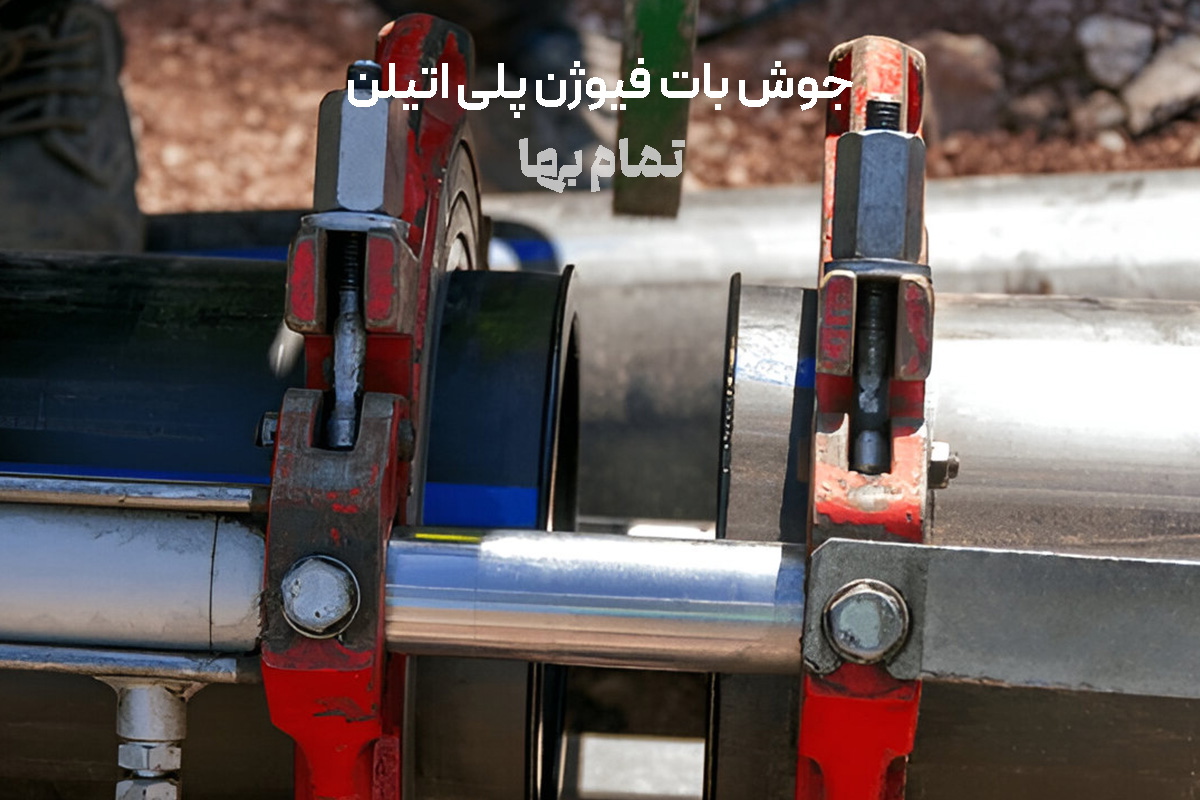
When the ends of two polyethylene pieces are heated above the crystallization point (≈125 °C) and into the 200–220 °C range, polymer chains leave the crystalline phase and become amorphous; they can then move freely and interdiffuse. Under controlled pressure, chains intermingle across the interface and, upon cooling, the weld zone effectively recreates the original pipe structure. Deviations in temperature, pressure, or time from recommended values can cause defects such as cold welds, polymer burn, or porosity.
Standard Execution Steps
Transport and Storage
Place pipes on flat horizontal supports to prevent ovalization. Proper yard stacking reduces the amount of facing (material removal) required later.
Surface Preparation
- Remove burrs and particles with a lint-free cloth moistened with 99% isopropanol.
- Ensure complete drying; moisture can vaporize and create porosity.
Clamping and Alignment
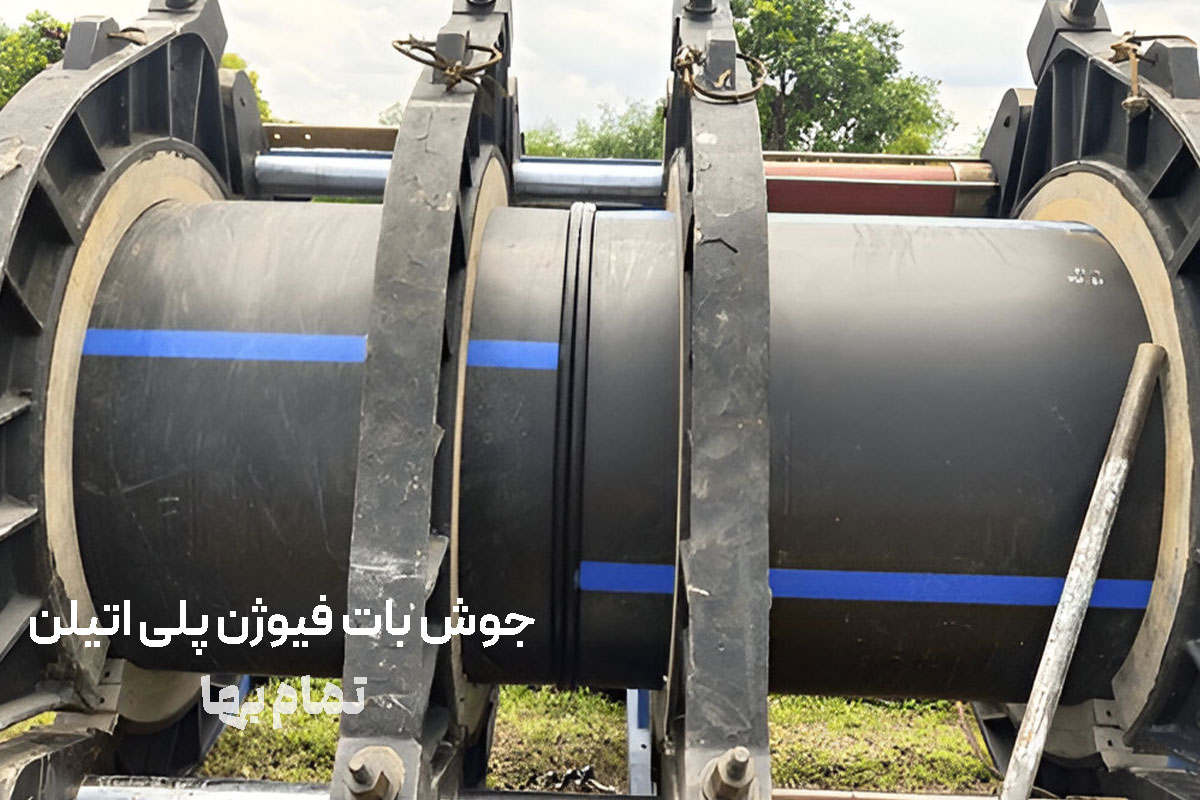
Machine clamps lock both pipes on a common axis. The allowable axial misalignment tolerance is typically less than 10% of wall thickness.
Mechanical Facing
A rotating facing tool removes 0.2–0.5 mm from each end. Uniform shavings and full, simultaneous blade contact with both ends indicate completion.
Heating (Soak)
With a PTFE-coated heater plate inserted, apply initial pressure (bead-up) to form a small, rounded bead. Then reduce pressure to allow heat to penetrate. Example reference times for PE100:
| Outer Diameter (mm) | Bead-Up Pressure (bar) | Heat Soak Time (s) |
|---|---|---|
| 110 | 0.15 | 40 |
| 250 | 0.10 | 80 |
| 400 | 0.08 | 120 |
Quick Change-over
The time from heater removal to re-contact must not exceed 8 s for small diameters and 12 s for large diameters.
Fusion Pressure
Set final pressure per standard (e.g., 0.15 bar for 250 mm, SDR 11) so that two symmetric external beads form.
Cooling Under Pressure
Before handling or moving, allow at least 10 minutes of cooling for every 25 mm of wall thickness. Shading and shielding from wind help achieve uniform cooling.
Equipment and Emerging Technologies
- Fully hydraulic CNC machines: pre-programmed pressure/temperature profiles minimize operator error.
- Data logging systems: digital sensors generate continuous pressure–time charts essential for traceability and project audits.
- Induction heaters: newer units use induction instead of resistance heating for tighter temperature control and uniform surface heating.
Quality Control and Testing
- Visual inspection: uniform external beads, absence of surface cracks, and bead symmetry are primary health indicators.
- Short-term destructive (burst) test: a welded pipe section is pressurized to failure; the break should occur outside the weld zone.
- Three-point bend test: for critical gas projects, a cut specimen is bent to 180°; no interlayer separation should appear.
- Recording and documentation: each weld receives a unique ID with operator, machine, time, and test results logged in the weld book—part of the handover dossier.
Common Defects and Remedies
| Defect | Likely Cause | Corrective Action |
|---|---|---|
| Cold weld | Insufficient pressure or excessive change-over time | Cut out and re-weld with correct parameters |
| Polymer burn | Heater temperature above allowable | Adjust thermostat; replace PTFE coating |
| Central porosity | Moisture in pipe or trapped air | Dry the pipe; maintain uniform pressure |
| Misalignment | Uneven bed or worn clamps | Service machine; use shims/spacers |
Reference Standards and Guidelines
- ISO 21307: three pressure profiles (low, dual-stage, high) with detailed time/pressure tables.
- DVS 2207-1: low-pressure approach; emphasizes 100-year pipe service life.
- ASTM F2620: North American protocol with shorter cooling times.
- Iran National Standard 18648: adapted to domestic water and gas project conditions.
Operator training to these documents and holding valid certification are prerequisites for large-site work.
Comparison with Other Methods
| Feature | Butt Fusion | Electrofusion | Socket |
|---|---|---|---|
| Strength | Equal to pipe | Near-pipe | Suitable for low pressure |
| Connection cost on long projects | Low | High (expensive couplers) | Medium |
| Workspace requirement | High | Low | Low |
| Joining unequal diameters | No (needs reducer) | Yes | Limited |
| Speed on large diameters | Moderate | Fast | n/a |
Design and Operations Notes
- Joint spacing: in lines with localized pressurization, keep at least 3× pipe OD between consecutive welds to reduce heat accumulation.
- Ambient preheating: below 5 °C ambient, use a temporary heated enclosure or warm-air heater.
- Cathodic protection: for gas infrastructure, butt-fused PE joints don’t need CP (no metal), though end flanges may.
- Periodic monitoring: for potable-water mains, conduct hydraulic tests per EN 805 to quickly detect any leakage.
The Future of Butt Fusion
- Trench welding robots: remote-guided operation reduces safety risks.
- Smart polymers with optical sensors: enable in-line defect detection without service interruption.
- Digital twin modeling: combines live welder data with CFD to predict joint service life.
Summary
By creating a homogeneous, robust joint, PE butt fusion underpins many fluid-transport networks worldwide. Adhering to the three key variables—temperature, time, and pressure—together with calibrated equipment and trained operators, ensures long-term, leak-free performance. Choosing among butt fusion, electrofusion, or socket fusion should reflect diameter, site conditions, and maintenance cost outlook. Applying recognized standards and leveraging technologies like digital data logging and induction heating pave the way for safer, more economical, and more sustainable infrastructure.