
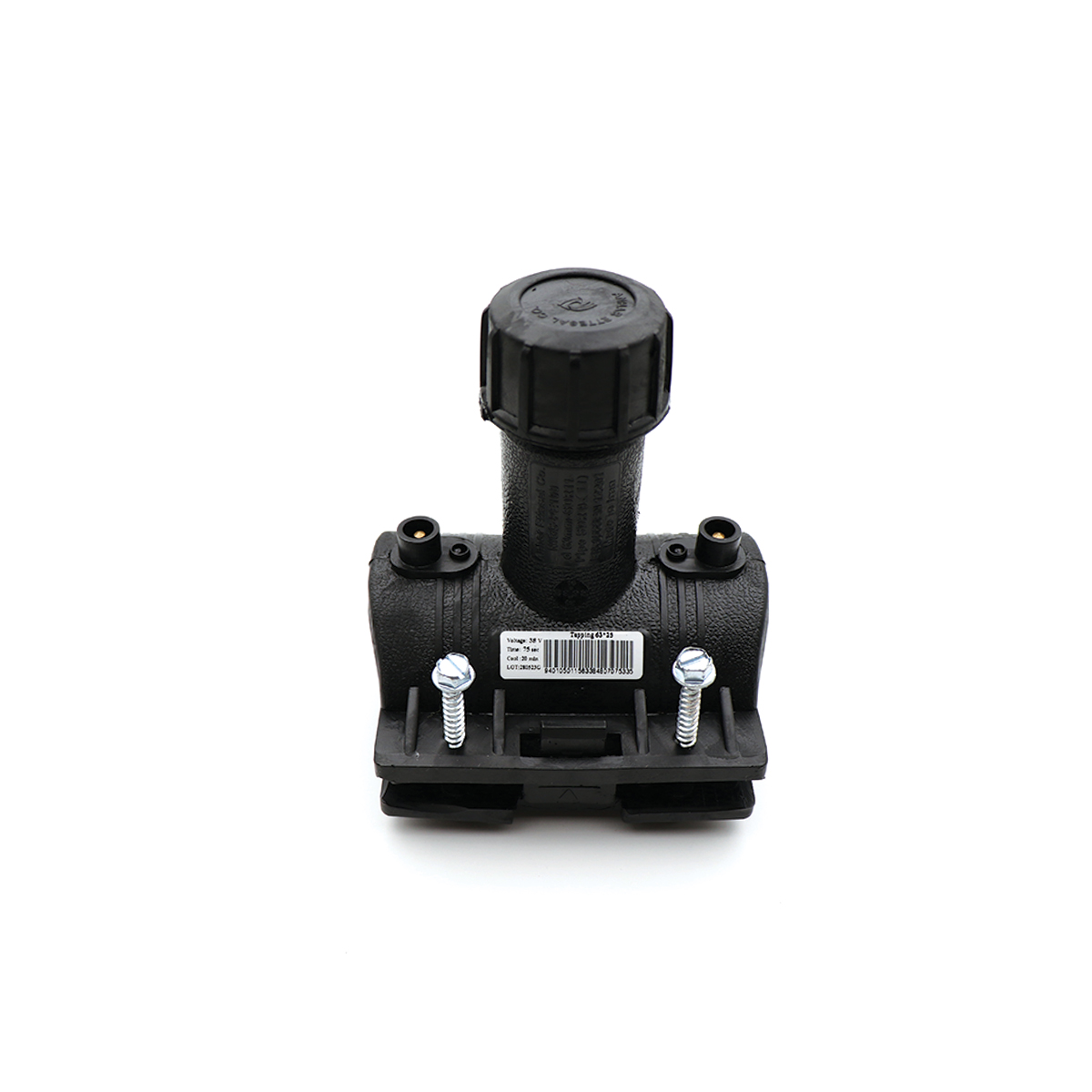
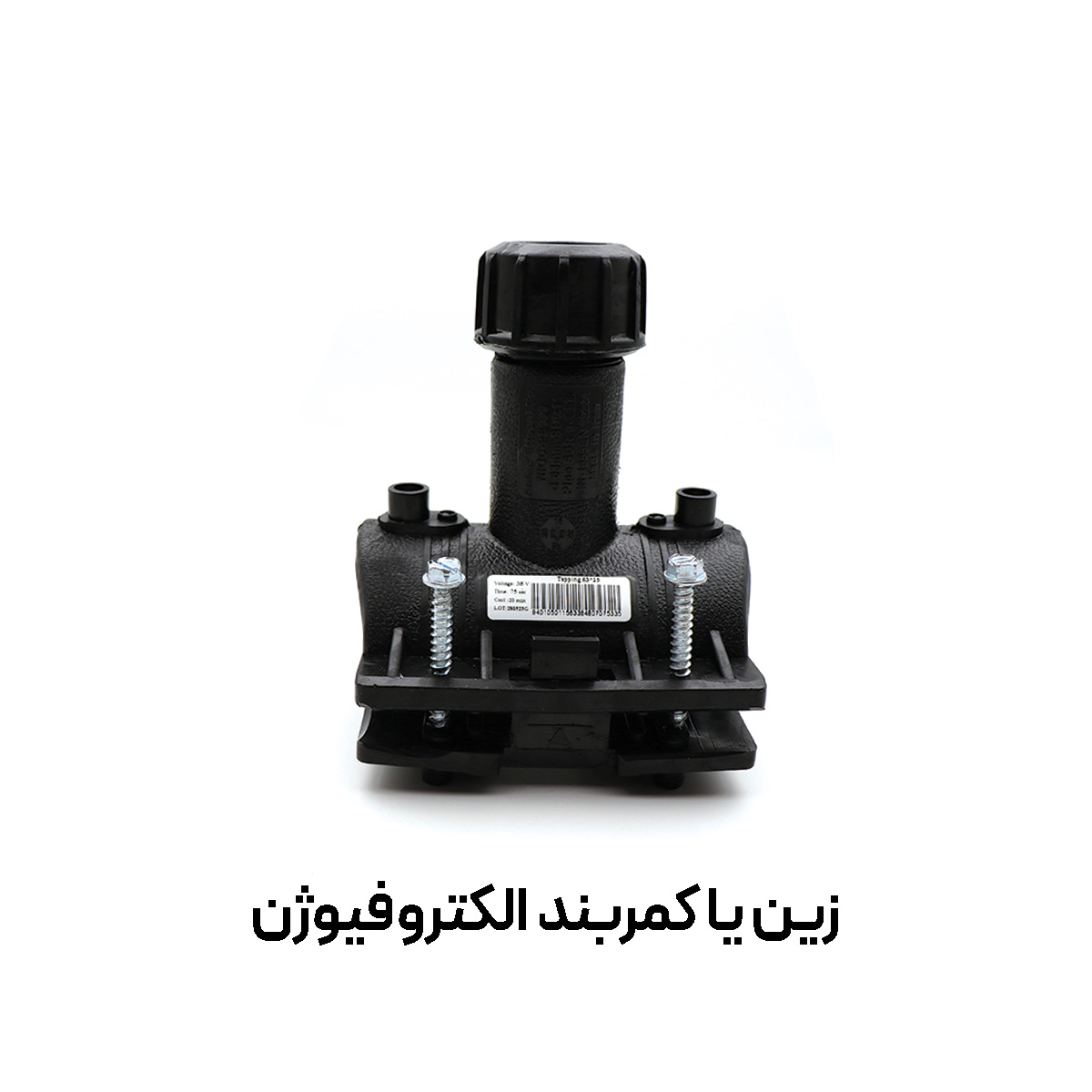
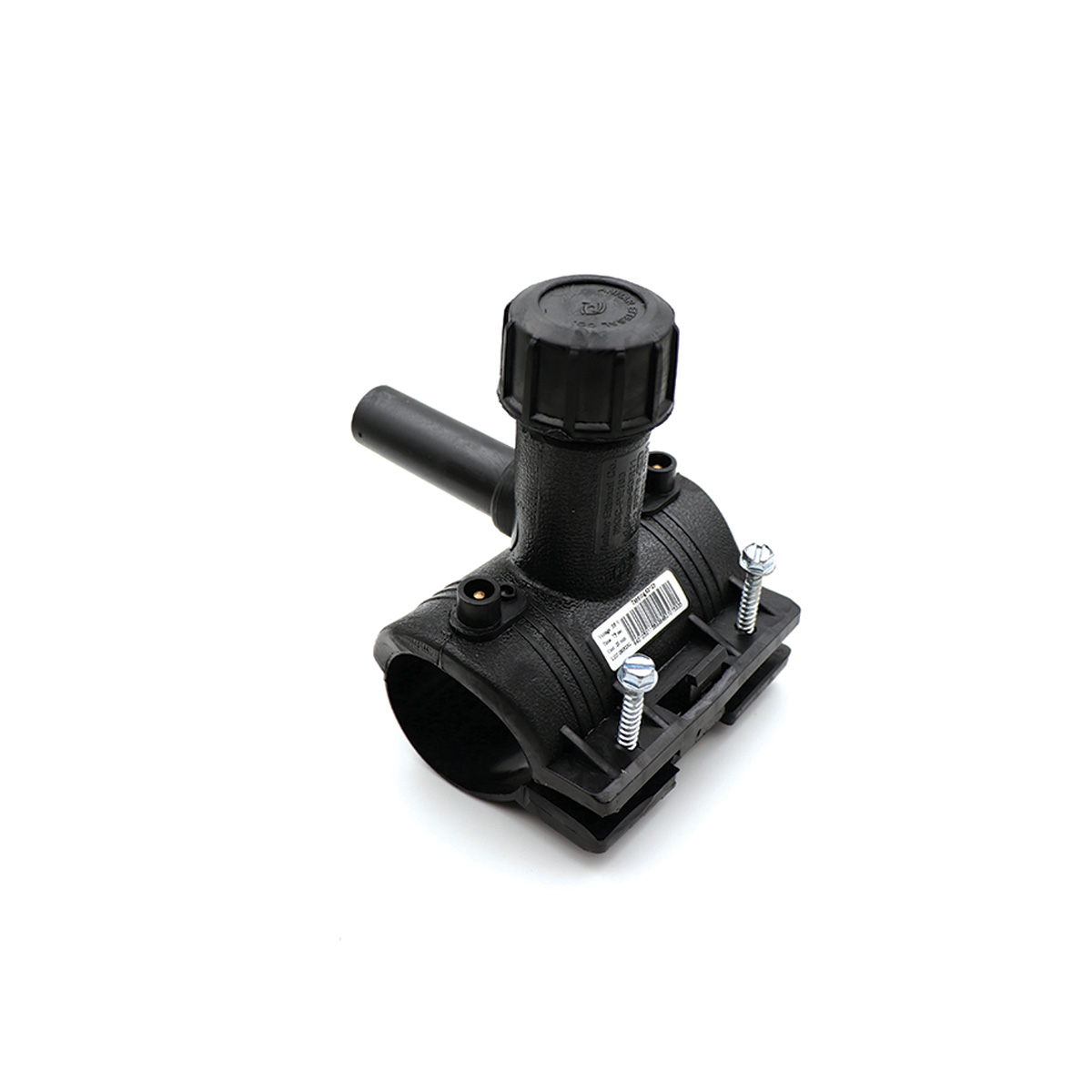
Electrofusion saddles are among the most reliable and fastest ways to create branches and even localized repairs (patching) in polyethylene water, wastewater, and gas networks. Using resistance wires embedded in their PE body, they melt the plastic when current passes and fuse to the pipe; the result is a seamless, leak-tight joint compatible with the network’s operating pressures. Thanks to easy installation, low weight, and high durability, electrofusion saddles are widely used in municipal, industrial, and agricultural projects.
What is an electrofusion saddle and how does it work?
An electrofusion (saddle/branch) fitting, made of PE100 or PE100-RC, sits on the outer wall of a PE pipe and, through its threaded or fusion outlet, provides a branch connection. A resistance coil is embedded in the saddle body. The electrofusion machine, by reading a barcode (or manual input), applies the proper voltage and time; the uniform heat melts the scraped, oxidized layer of the pipe and the saddle body, allowing interdiffusion in a visco-plastic phase. After the cycle and cooling, a uniform, highly robust joint forms. To prevent shifting and ovalization during welding and cooling, a dedicated clamping tool is used.
Types of electrofusion saddles and branch fittings
- Standard branch saddle: Outlet as a fusion spigot/socket or threaded (typically BSP/NPT) for accessories.
- Tapping Tee: A saddle with an internal valve or cutter for safe drilling after fusion; suitable for live lines.
- Repair Saddle: For patching localized damage such as holes or surface cracks.
- High-pressure/Gas saddle: With gas approvals and traceability for pressure networks.
- Reducing-outlet saddle: For size conversion when the main pipe is large and the branch is smaller.
Applications of electrofusion saddles
- Urban and rural water supply: Creating domestic and industrial branches with minimal excavation.
- Gas distribution: Reliable tapping on PE gas mains (with tapping tee and safety protocols).
- Agriculture and pressurized irrigation: Quick installation of risers, valves, and drippers on the main line.
- Process industries: Transfer of PE-compatible chemicals, cooling lines, and compressed air within permitted pressures.
- Firefighting systems: Branches for hydrants and risers within design pressure limits.
- Sewer and drainage: Adding new inlets to PE collectors.
Advantages and limitations
Advantages
- Leak-tightness due to molecular welding; smooth, uniform fusion bead
- Low weight, fast installation, minimal excavation space
- Excellent mechanical and chemical resistance; corrosion- and abrasion-proof
- Traceability and quality control via barcode and weld parameter logging
Limitations
- Sensitive to surface preparation (scraping) and cleanliness
- Requires a clamp and strict cooling time compliance
- Ambient temperature limits for welding (need shading/cover or heating in cold)
Difference between an electrofusion saddle, coupler, and elbow/tee
- Electrofusion saddle/branch: Sits on the pipe wall and creates a protruding branch; ideal for adding a new outlet.
- Electrofusion coupler: For end-to-end pipe connection (repair or extension).
- Electrofusion elbow/tee: For changing direction or creating a full tee with pipe cutting.
Table 1 — Practical comparison of electrofusion fittings
| Fitting type | Primary use | Common size range | Key advantage | Installation note |
|---|---|---|---|---|
| Saddle/Branch | Branching from an existing line | Main 63–630, outlet 20–160 mm | Branching without fully cutting the pipe | Clamp and surface scraping required |
| Tapping Tee | Branching on a live line | Similar to saddle | Safe drilling after fusion | Pressure control and safety during cutting |
| Coupler | Longitudinal pipe joining/repair | Per pipe SDR and diameter | Excellent alignment and zero leakage | Calibrate and scrape both pipe ends |
| EF Tee | Creating a full tee | 63–400 and above | High strength for pressure networks | Pipe cutting and precise alignment |
Technical selection guide for electrofusion saddles
- Body material: PE100 or PE100-RC (higher resistance to slow crack growth; suitable for aggressive soils).
- SDR compatibility: Match the saddle to pipe OD and SDR/PN so contact pressure and thermal penetration are appropriate.
- Outlet type: Fusion (electrofusion/socket or butt) for PE branches; threaded for valves, check valves, or gauges.
- Standards and approvals: EN 12201 / ISO 4427 for water, EN 1555 for gas, welding procedures per ISO 21307 and DVS 2207.
- Traceability & barcode: EAN/QR for automatic parameters, logging of temperature/time/voltage, and batch traceability.
- Environmental conditions: Weld within the manufacturer’s temperature window; use cover in cold and shading/mild cooling in heat.
- Clamping & calibration: For oval or spring-back pipes, use a calibrator and steel clamp.
Table 2 — Quick selection guide by size and application
| Main pipe OD (mm) | Typical branch outlets | Recommended saddle SDR/PN | Sample application |
|---|---|---|---|
| 110–160 | 32, 40, 50 | Same class as pipe (e.g., SDR11, PN16 water) | Domestic/light industrial branches |
| 200–315 | 63, 75, 90 | SDR11/17 depending on pressure | Irrigation and industrial risers |
| 355–500 | 110, 125 | SDR17 or higher | Hydrants and urban branches |
| 560–630 | 160 | Per gas/water network design | High-pressure and gas distribution branches |
Important note: When connecting pipe-to-pipe using a saddle, equal outer diameter and sufficient contact area must be ensured; otherwise use an EF tee or a coupler.
Standard installation steps (step-by-step)
- Line safety: Isolate flow, depressurize, ventilate (especially for gas), and obtain hot-work permits if required.
- Mark weld location: Precisely set branch position, keeping distance from adjacent fittings and bends.
- Surface preparation: Clean, dry, and scrape the oxidized layer with a scraper to a matte, uniform surface; do not touch by hand.
- Mount and fix the saddle: Place on the pipe and tighten the steel clamp to the proper torque; check outlet alignment.
- Set the fusion machine: Scan barcode or enter voltage/time manually; verify input voltage and cables.
- Perform the weld: Do not move during heating; monitor melt indicators (pins on some models).
- Cooling and no stress: Do not impact, load, or assemble until cooling time is complete.
- Visual and pressure test: Check uniform melt at the edges, then pressure-test per client/standard.
- Drilling (for tapping tees): After weld acceptance and cooling, drill with the specific tool under safety control.
Common mistakes and troubleshooting
- Insufficient scraping → leaks or cold welds; re-scrape and clean.
- Dirt/moisture → bubbles and weak weld; keep the area fully dry and dust-free.
- Pipe ovality → poor contact; use a calibrator and proper clamp.
- Improper voltage/generator drop → incomplete weld or burn; use a standard, calibrated generator and cables.
- Movement during cooling → micro-cracks and leaks; keep the joint unloaded until cooling completes.
Maintenance, inspection, and safety (HSE)
- Record and archive weld logs (operator code, temperature, time, serial) for traceability.
- Periodic calibration of the fusion machine and visual inspection of terminals and cables.
- Use insulating gloves, goggles, and masks in dusty or gassy areas; keep away from flame and sparks.
- Maintain minimum spacing between successive welds on one pipe as per manufacturer guidance.
Electrofusion saddle pricing
Prices depend on factors such as brand and approvals (water/gas), body material (PE100 or PE100-RC), main pipe OD and outlet size, outlet type (threaded, fusion, tapping tee with cutter or valve), SDR/PN, country of origin, and warranty/traceability conditions. In Iran’s market, for common sizes, observed prices can range roughly from 155,000 to 600,000 tomans, and higher depending on size/quality. Project pricing also depends on order volume, ancillary services (clamp, scraper, extra nozzles), and delivery terms.
Quick pricing guide
- Small sizes (e.g., 32–50 outlets on 110–160 mains): more economical
- Medium sizes (63–90 outlets on 200–315 mains): mid-range
- Large/high-pressure (110–160 outlets on 355+ mains or gas-rated models): top tier
Key tips for purchasing an electrofusion branch saddle
- Virgin PE material, compliant with water/gas standards, with valid barcode.
- Match pipe OD and outlet to project needs; when in doubt, follow the manufacturer’s sizing tables.
- Corrosion resistance and reliable sealing; inspect body uniformity and molding quality.
- Have the proper clamp and standard scraper at installation; use a calibrated fusion machine.
- For live gas lines, use a tapping tee and fully observe HSE.
Recommended standards and documents for PE fittings and welding
- EN 12201 / ISO 4427 (water), EN 1555 (gas) — materials and fittings requirements
- ISO 21307 and DVS 2207 — welding procedures and quality control
- Client/supervisor guidelines for hydrostatic testing and commissioning
Tamambaha, as a supplier of electrofusion saddles and other PE fittings, offers technical advice, a wide range of sizes and grades (PE100/PE100-RC), and alignment with the needs of water, gas, and agricultural projects across the Middle East and neighboring regions. These products are also available from other vendors; Tamambaha’s advantage is its focus on product authenticity, standards compliance, and support during selection and installation.